Summary
A focal point gives every reception table a clear identity and makes the entire setup easier to appreciate. It establishes the main attraction and supports the theme. Whether you're planning a wedding reception, gala, anniversary dinner, or corporate banquet, one well-planned focal point brings the entire tablescape together.
Our Products


Quick Answer
- Choose one focal point for every reception table.
- Select a centerpiece that suits the event and table size.
- Layer linens to add color, texture, and definition.
- Arrange place settings that complement the centerpiece.
- Repeat the same styling approach across every guest table.
A reception table becomes more inviting when every decorative element supports a single focal point. The centerpiece, table linens, and finishing accents should complement one another instead of competing for attention. That approach gives every table a clean, organized appearance that guests notice as soon as they arrive.
Decide What You Want Guests to Notice First

A focal point is the feature that immediately captures attention when guests approach the table. It could be an elegant floral arrangement, a collection of candles, a dramatic lantern display, or another decorative element that reflects the event's style. Choosing that feature first gives the rest of the tablescape a clear direction.
Every decoration surrounding the focal point should strengthen the overall design. Tablecloths establish the foundation, runners introduce another layer of color or texture, and linen napkins reinforce the palette through each place setting. Decorative accents, dinnerware, and glassware then complete the arrangement while keeping the focal point as the main attraction.
Scale deserves just as much attention as style. Compact centerpieces suit smaller reception tables because they preserve comfortable dining space, while larger tables can support fuller arrangements that fill the area more effectively. Matching the size of the centerpiece to the table creates a design that looks intentional and functions well for guests.
Reception Table Centerpiece Ideas That Capture Attention

The centerpiece often becomes the focal point because it naturally occupies the most prominent position on the table. Choosing a style that complements the event theme gives every reception table its own personality. The following centerpiece ideas suit a variety of venues and celebrations.
- Floral centerpieces – Low floral arrangements encourage conversation and suit guest tables, while taller designs make a stronger statement in spacious reception venues. Roses, hydrangeas, peonies, orchids, and seasonal blooms all create distinctive looks when paired with coordinated table linens.
- Non-floral centerpieces – Candles, lanterns, greenery, decorative bowls, sculptural pieces, and seasonal accents introduce character through different materials and textures. These options work especially well for receptions that call for a less traditional centerpiece.
- Mixed centerpieces – Flowers, candles, greenery, crystal accents, and decorative objects can share the same arrangement when they follow one color palette and one design style. Combining several elements also gives the centerpiece greater depth and a richer appearance.
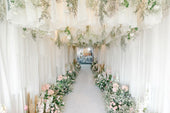
- Statement centerpieces – Hanging floral installations, suspended greenery, and crystal chandeliers draw immediate attention in grand reception spaces. These dramatic displays work especially well above sweetheart tables, head tables, or other featured areas that deserve extra emphasis.
How to Style Reception Tables

Once you've selected the focal point, every remaining detail should support it. The tablecloth establishes the foundation, giving every decorative element a consistent base. Choose a color and texture that supports your focal point rather than competing with it. A simple, solid linen almost always works better here than a busy pattern.
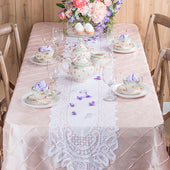
Introduce another layer of color, texture, or pattern with a table runner. It adds dimension to the tablescape and provides a natural foundation for other decorative accents.
Once your linens are down, build your place settings around the centerpiece. Position charger plates, flatware, and glassware so they frame the focal point rather than crowd it. Place a folded linen napkin on top of each charger plate to complete the place setting and give every seat a refined look.
Accents like candles, menu cards, place cards, table numbers, or party favors add thoughtful details that reinforce the event's style. Keep them low and simple, so they add warmth without pulling attention away from the main focal point. When every element knows its role, the whole table comes together and looks polished.
How to Create a Focal Point Without a Florist
You do not need a florist to create a strong focal point on a reception table. Candles and lanterns are among the easiest alternatives, and they work across almost every event style. Group them at different heights in the center of the table, and they instantly become the focal point.
Greenery and branches are another budget-friendly option that still looks elevated. Eucalyptus, ferns, or simple leafy branches arranged in a low vase or laid along the center of the table create a natural, organic focal point without the cost of full floral arrangements. They also pair well with candles if you want to add a little more dimension.
Decorative objects like geometric terrariums, lanterns, themed pieces, or vases can also anchor a table beautifully. The key is choosing one strong object and letting it lead rather than filling the table with too many competing pieces. One well-chosen object does more for a table than five mismatched ones.
Match the Focal Point to the Table Shape

The shape of the table influences the size, placement, and style of the focal point. A centerpiece that suits the layout creates better balance and allows every decorative element to fit comfortably. Planning around the table shape also improves the dining experience for every guest.
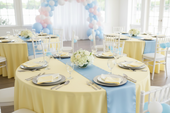
Round tables work best with one central arrangement that remains visible from every seat. Floral centerpieces, candle groupings, or mixed arrangements fit naturally in the middle and leave generous space for place settings. This layout keeps conversations comfortable while maintaining a strong visual anchor.
Rectangular tables benefit from designs that extend naturally along the center. Floral garlands, repeating candle groupings, greenery, or coordinated decorative pieces distribute the styling evenly and prevent one section of the table from drawing all the attention.
Common Focal Point Mistakes to Avoid
A focal point should organize the tablescape, making every decorative element feel connected. Careful planning keeps the table attractive, practical, and comfortable for guests. Avoiding a few common mistakes can make a noticeable difference in the finished design.
- Choosing a centerpiece that's too large. Oversized arrangements reduce dining space and make conversations less comfortable. Select a centerpiece that suits the size of the table and leaves enough room for place settings.
- Combining too many decorating styles. Mixing rustic, modern, glamorous, and traditional elements on the same table creates a confusing design. Choosing one clear style gives every decorative piece a stronger purpose.
- Ignoring the table size. Small tables benefit from compact centerpieces, while larger tables can accommodate fuller arrangements. Matching the scale of the decor to the table creates a more comfortable layout.
- Crowding the table with decorative accents. Every decorative piece should have enough space to stand out. Leaving open areas around the centerpiece also keeps the table functional during the meal.
- Changing the styling from one guest table to another. Consistent linens, centerpieces, and decorative accents give the reception a unified appearance. Featured tables can receive additional decorative touches while maintaining the same overall style.
A reception always looks more polished when every guest table follows the same design direction. Consistency gives the venue a stronger visual identity and allows the featured tables to stand out naturally.
The Bottom Line
A memorable reception begins with tables that immediately capture guests' attention. One well-chosen focal point, supported by coordinated linens and thoughtful decorative details, gives every table its own character while strengthening the event's overall style. Guests appreciate the care that goes into a beautifully prepared dining space.
Building each table around one defining feature also simplifies the decorating process. Every styling decision becomes easier because the linens, centerpieces, and decorative accents already share one clear direction. That approach creates reception tables that remain inviting throughout the celebration and leave a lasting impression.
Frequently Asked Questions
How do you create a focal point for every reception table?
Choose one decorative element that naturally becomes the center of attention, then coordinate the surrounding linens and decor to support it. A well-planned focal point gives the entire tablescape a clear direction and makes every table look more intentional.
What can you use as a focal point on a reception table?
Floral arrangements remain one of the most popular choices, though candles, lanterns, greenery, sculptural pieces, and seasonal displays also work beautifully. Select a centerpiece that complements the event theme, venue, and table size.
Do all reception tables need a centerpiece?
Not necessarily, but every table does benefit from having some kind of focal point. It does not have to be a traditional centerpiece. A cluster of candles, a simple greenery arrangement, or even a decorative object can serve the same purpose. The goal is to give the table a visual anchor, so it does not feel empty or unfinished.
How do I layer decor to create a focal point on a table?
Start with your linen as the base, then add your centerpiece as the main focal point. Layer in charger plates, napkins, and glassware to frame the centerpiece, then finish with small accents like candles or scattered petals to fill the space. Each layer should support the focal point, not compete with it.
How do you style round and rectangular reception tables differently?
Round tables look best with a centerpiece placed in the middle, where every guest can enjoy the view. Rectangular tables accommodate extended arrangements, repeating decorative groupings, or several coordinated centerpieces that distribute the styling evenly along the table.
How do I make reception tables look expensive?
Consistency is the biggest factor. When your linens, place settings, and centerpieces all feel cohesive, the table looks intentional and elevated regardless of budget. Keeping things simple almost always reads as more expensive than a table that is overdone with too many competing elements.