Summary
Event planners often wonder whether charger plates should coordinate with flatware or table linens when designing formal place settings. The answer depends on your design goals, but chargers typically work best when they complement linens rather than match flatware exactly. Understanding how chargers interact with tablecloths, napkins, and table runners helps event designers create cohesive presentations that photograph beautifully and meet client expectations for weddings, galas, and corporate events.
Our Products


Napkins
Charger Plates
Centerpieces
Quick Answer
Charger plates should coordinate with table linens rather than match flatware exactly:
- Chargers complement tablecloth colors, napkin tones, or runner accents
- Flatware coordination is secondary to linen harmony
- Metallic chargers (gold, silver, copper) pair with matching flatware finishes
- Colored chargers tie into the overall linen palette
- The goal is cohesive design, not exact matching
The key is creating visual balance where chargers bridge the gap between linens and dinnerware without competing with flatware.
Understanding Charger Plate Function


Charger plates serve as decorative bases that frame dinner plates and protect tablecloths from spills. They sit directly on the tablecloth, making them part of the linen presentation rather than the dinnerware collection. This positioning means chargers interact more visually with linens than with flatware.
Event planners use chargers to introduce color, texture, or metallic accents that enhance the overall table design. They create visual anchors at each place setting, tying together various elements like tablecloths, runners, napkins, and centerpieces. This coordinating role makes linen compatibility more important than flatware matching.
Chargers remain at place settings through appetizer and soup courses, providing consistent visual impact throughout the early meal stages. Their prominence during this time means they need to work harmoniously with the linen foundation rather than the smaller flatware details.
Why Linens Matter More Than Flatware
Chargers cover significantly more visual space than flatware. A 12-13-inch charger creates a large color or metallic presence at each place setting, while flatware pieces are smaller and more dispersed. This size difference means chargers have a greater impact on overall table aesthetics.
Linens form the foundation of table design. Tablecloths, runners, and napkins establish the color palette and style direction before other elements are added. Chargers that complement this foundation create cohesive presentations, while chargers that clash with linens disrupt the entire design regardless of flatware coordination.
From a practical standpoint, event planners typically select linens first based on venue, theme, and client preferences. Chargers are chosen to enhance these linen selections, with flatware coordination being a secondary consideration that happens naturally when metallic finishes align.
Coordinating Chargers with Tablecloths

The relationship between chargers and tablecloths creates the most significant visual impact. Event designers should consider contrast, complement, or monochromatic approaches when pairing these elements.
Contrast creates drama and definition. Gold chargers on navy tablecloths, silver chargers on burgundy linens, or white chargers on black tablecloths create striking presentations that photograph beautifully. This approach works well for formal galas and upscale weddings where visual impact matters.
Complementary coordination offers softer elegance. Champagne chargers on ivory tablecloths, rose gold on blush linens, or bronze on chocolate brown create harmonious presentations without stark contrast. This approach suits romantic weddings and sophisticated corporate events.
Monochromatic layering uses varying shades of the same color family. White chargers on ivory tablecloths, silver on gray linens, or gold on champagne create subtle, refined presentations. This technique works for minimalist modern events and classic formal occasions.

Not always. Indoors, you do not have wind working against you, which is the primary reason clips are considered essential for outdoor events. But that does not mean your tablecloth will stay perfectly in place on its own.
The honest answer is that it depends on three things: how active the table will be, what type of tablecloth you are using, and what kind of table surface you are working with. A floor-length tablecloth on a formal seated dinner table is unlikely to move much. A short-drop tablecloth on a busy buffet table is a different story entirely.
Working with Table Runners and Overlays


Table runners introduce additional color and texture that chargers should acknowledge. When runners are present, chargers can either match the runner color or coordinate with the base tablecloth, depending on which element you want to emphasize.
For events using bold runner colors over neutral tablecloths, chargers that pick up the runner tone create intentional color stories. Red runners on white tablecloths pair beautifully with red or gold chargers that reinforce the accent color.
When using metallic or sequin runners, chargers in matching metallic finishes create cohesive glamour. Gold sequin runners work with gold chargers, silver runners with silver chargers. This coordination creates polished presentations for upscale events.
Overlays add another layer to consider. Sheer overlays in colors like blush, champagne, or dusty blue can guide charger selection. Chargers that complement overlay tones rather than the base tablecloth create sophisticated, layered designs.
Napkin and Charger Coordination

Napkins sit on or near chargers, creating direct visual relationships. Event planners can use this proximity strategically to create color harmony or intentional contrast.
Matching napkins to chargers creates bold, unified statements. Red chargers with red napkins, gold chargers with gold napkins, or navy chargers with navy napkins create strong visual anchors at each place setting. This approach works for events with simple tablecloth bases where you want place settings to pop.
Contrasting napkins and chargers add dimension. Gold chargers with navy napkins, silver chargers with burgundy napkins, or white chargers with emerald napkins create sophisticated color blocking. This technique adds visual interest while maintaining cohesion through thoughtful color selection.
Neutral napkins allow chargers to shine. White or ivory napkins work with any charger color, letting the charger be the primary color or metallic accent. This versatile approach simplifies inventory management for rental companies serving diverse client preferences.
When to Match Flatware
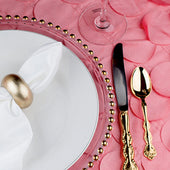
While linen coordination takes priority, flatware matching makes sense in specific situations. Metallic chargers naturally pair with flatware in matching finishes, creating cohesive metallic stories across the table.
Gold chargers work beautifully with gold flatware, creating warm, luxurious presentations. This combination suits fall weddings, holiday galas, and events with rich color palettes like burgundy, navy, or emerald.
Silver chargers pair with silver flatware for classic elegance. This timeless combination works for winter weddings, corporate events, and any occasion requiring traditional formal styling.
Copper or rose gold chargers coordinate with matching flatware finishes for trendy, modern presentations. This combination appeals to contemporary couples and events with blush, peach, or dusty rose color schemes.
However, mixed metals are increasingly acceptable in event design. Gold chargers with silver flatware, or vice versa, create eclectic sophistication when done intentionally. The key is ensuring the charger still coordinates with linens even when flatware finishes differ.
Practical Considerations for Event Planners
Event rental companies managing charger inventory should prioritize versatile options that work across multiple linen combinations. Gold, silver, and clear chargers offer maximum flexibility, coordinating with numerous tablecloth colors and styles.
Specialty colored chargers like burgundy, navy, or emerald have more limited applications but create a stunning impact for specific color schemes. Rental companies should balance versatile basics with specialty options based on their market and client preferences.
Budget considerations matter for event planners purchasing chargers for specific events. Investing in chargers that coordinate with chosen linens ensures cohesive presentations, while trying to match flatware exactly may require additional purchases that don't serve the overall design.
Storage and inventory management become simpler when chargers are selected primarily for linen coordination. Organizing chargers by color family or metallic finish helps planners quickly identify options that work with specific tablecloth and runner combinations.
Creating Cohesive Color Stories
The most successful table designs create intentional color stories where every element serves a purpose. Chargers should advance this narrative by bridging linens and dinnerware rather than existing as isolated matched sets with flatware.
For monochromatic events, chargers in varying shades of the primary color create depth. All-white events might use ivory tablecloths, white chargers, and cream napkins for subtle tonal variation.
For complementary color schemes, chargers can introduce the secondary color. Navy and gold events might use navy tablecloths with gold chargers, or gold tablecloths with navy chargers, depending on which color should dominate.
For analogous color schemes using colors next to each other on the color wheel, chargers help transition between hues. Blue-green events might use teal tablecloths, silver chargers, and navy napkins for harmonious progression.
Final Thoughts
Charger plates should coordinate with table linens rather than match flatware exactly. Their size, position, and visual impact make them integral parts of the linen presentation, requiring harmony with tablecloths, runners, and napkins. While metallic chargers naturally pair with matching flatware finishes, the primary design consideration should be how chargers complement the linen foundation.
Event planners who prioritize linen coordination create cohesive, professional presentations that photograph beautifully and meet client expectations. Whether choosing gold chargers for warm elegance, silver for classic sophistication, or colored options for bold statements, the key is ensuring chargers enhance rather than compete with the carefully selected linen palette.
Frequently Asked Questions
What is a charger plate?
A charger plate is a decorative base plate placed beneath dinnerware during formal meals. It defines each place setting and adds color, texture, or metallic accents to the table design. Chargers are removed before the main course is served.
What are charger plates used for?
They frame the dinner plate, protect linens from spills, and enhance the overall presentation of the table. Chargers are common at weddings, banquets, and milestone celebrations where visual impact matters.
What size is a charger plate?
Our charger plates measure 13 inches in diameter. This size allows standard dinner plates and bowls to sit comfortably inside the rim while still showing the decorative border.
How do you use charger plates?
Place the charger at each seat before guests arrive, then layer the dinner plate or salad plate on top. Chargers remain in place until the main entrée is served, at which point they are cleared from the table.
Can you mix gold and silver chargers with different flatware?
Yes, mixed metals are increasingly acceptable in event design. Gold chargers can work with silver flatware and vice versa, as long as the chargers coordinate well with your table linens and overall color scheme.