Summary:
Yes, a table runner can be shorter than the table. Runner length is a design choice rather than a strict rule. Short runners create a modern, centered look, while longer runners that drape over the edges feel more formal. The best length depends on the event style, table size, and overall décor layering. Exploring different table runner styles helps you find the right proportion for your celebration.
Our Products


Table Napkins
Round Charger Plates
Glitz Sequin Table Runner
Quick Answer
A table runner does not need to hang over the edges to look correct.
- Short runners that stay within the tabletop create a clean, contemporary style
- Medium runners that reach the edges feel balanced and versatile
- long runners with a drape on both sides look more formal and traditional
Each option works depending on the setting and design goal.
Standard Table Runner Length Guidelines
A runner that stops several inches before the table edge creates a centered, modern appearance.
This style works well for:
- minimalist table settings
- casual dining
- contemporary event décor
- layered centerpiece designs
Because the table surface remains visible, this length is often used when the table itself is decorative.
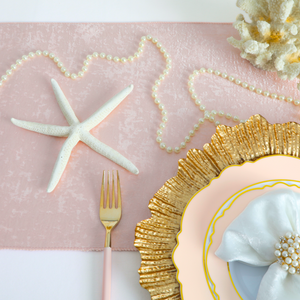


Edge-Length Runner (Flush With Table Ends)
Runners that reach the table edges without hanging over create a balanced, versatile look suitable for many occasions.
This is common for:
- family gatherings
- buffet tables
- semi-formal receptions
- multipurpose venues
It offers structure without the extra fabric movement of a draped runner.
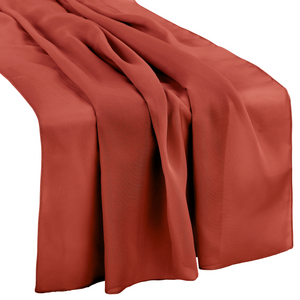
Long Runner With Drape
Traditional styling usually allows 6 to 12 inches of fabric to hang over each side.
This creates softness and visual flow, especially for:
- weddings
- banquet tables
- holiday dinners
- formal receptions
Long runners also pair well with layered linens and coordinated décor accents.
How Event Style Influences Runner Length


Modern and Minimalist Tablescapes
Short runners emphasize:
- clean lines
- visible tabletops
- simple centerpiece focus
This look is common in contemporary venues, small gatherings, and styled photo tables where restraint feels intentional.
Rustic, Outdoor, or Casual Events
Medium-length runners that reach the table edge feel relaxed but still styled.
They suit:
- backyard celebrations
- garden weddings
- farmhouse-inspired décor
- community events
This balance keeps tables practical for dining while maintaining décor continuity.
Formal Weddings and Banquets
Long draping runners remain the most traditional choice for elegant settings.
They add:
- vertical movement
- layered texture
- visual softness in photos
Because of this, draped runners are widely used in reception halls, ballrooms, and head tables.
Table Size and Proportion Considerations
Runner length should always relate to table dimensions, not just style preference.
- Small tables look balanced with shorter runners
- long banquet tables often need a drape to avoid appearing undersized
- round tables typically use centered runners or layered accents instead of long overhangs
Maintaining proportion keeps the table design intentional rather than accidental.
When a Short Table Runner Works Best
Choose a shorter runner when:
- The tabletop design should remain visible
- The décor is concentrated in the center
- The event style is modern or casual
- Quick setup and cleanup are priorities
Short runners are especially practical in high-traffic venues and everyday dining spaces where excess fabric may interfere with seating.
When a Longer Runner Is the Better Choice
Use a draped runner when:
- The event is formal or traditional
- layered linens are part of the design
- The table needs visual height or softness
- photography and presentation are priorities
Long runners naturally frame ceremony tables, sweetheart tables, and banquet seating, making them a popular wedding choice.
Styling Tips for Balanced Table Design
Professional event stylists often focus on layering and proportion rather than strict measurements.
Helpful techniques include:
- pairing runners with coordinated centerpieces
- matching the runner texture to the event theme
- adjusting runner length based on venue formality
- keeping seating comfort in mind when using drapes
These small decisions help tables feel cohesive across different venues, climates, and event sizes. Combining runners with table overlays or placemats creates additional layering options for creative table designs.
Final Thoughts
A table runner can absolutely be shorter than the table. Length is a styling decision shaped by formality, table size, and décor goals rather than a fixed rule.