Summary
Maintaining a pristine guest environment requires a proactive strategy for linen care, especially during multi-course catering events. By combining durable fabric selection with strategic layering and rapid-response cleaning kits, you can protect your inventory from permanent damage. This guide outlines how to manage spills in real-time, preserve your professional reputation, and extend the lifespan of your wholesale linen assets.
Our Products


Tablecloth
Table Runners
Napkins
Quick Answer: The 3-Step "Pristine Table" Protocol
For caterers, the secret to clean linens is a three-tier defense system:
- Prevent: Use a high-quality tablecloth with a liquid-resistant finish and protective underlays.
- Deflect: Incorporate table runners or a table overlay to act as "sacrificial layers" in high-spill zones.
- Respond: Keep a "stain emergency kit" on hand to treat spots immediately before they set into the fibers.
Pre-Event Preparation to Keep Linens Spotless

The battle for a clean table is won before the first guest arrives. Starting with the right materials ensures that your team isn't fighting an uphill battle against absorbent fabrics.
Choosing the Right Fabrics: Why Polyester and Treated Blends Resist Spills
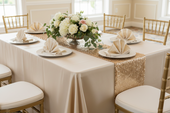
Experienced caterers typically source their tablecloths wholesale in 100% polyester. Unlike natural cotton or linen, polyester is non-porous, meaning liquids tend to bead on the surface rather than soaking into the core of the thread. This is the gold standard for a tablecloth for catering events because it resists wrinkles and allows for easier on-site spot cleaning.
Layering with Table Runners as Stain Barriers
In high-traffic areas like guest tables or drink stations, use table runners strategically. Runners add a layer of protection over the center of the table where wine bottles and shared platters are most likely to drip. It is significantly more cost-effective to replace table runners in bulk than to retire an entire set of floor-length linens due to a single center-table stain.
Protecting Tablecloths from the Table Surface with Charger Plates

Keep your tables free from spills by adding charger plates to your dining table setup. Chargers are a simple way to keep your tablecloths clean while adding a touch of detail to your place setting. Elevate your dining experience with carefully coordinated chargers.
Essential Tools for On-Site Touch-Ups
A professional presentation requires a "mobile hospital" for linens. Your kit should be tucked under a table skirt at the service station for quick access.
- Portable Steamers: These are essential for eliminating "settling creases" that appear after guests have been seated for long periods.
- Instant Stain Solutions: Use oxygen-based sprays that lift pigment without bleaching the fabric.
- The Secret Utility of White Chalk and Club Soda: For oil-based stains (like salad dressing), white chalk absorbs the grease. For red wine, club soda remains the industry standard for immediate dilution.
Mid-Event Management for High-Traffic Parties

The Buffet Shield: Placing Trays and Mats to Catch Drips
The buffet is the most dangerous zone for a tablecloth. Use decorative trays or slate mats under sauce-heavy dishes. If a spill occurs on a table skirt, the pleating can often hide the blemish until the event concludes, making pleated skirts a smart choice for food stations.
Napkin Rotation Strategies
Table napkins are the most frequently soiled items. Always carry 15-20% more table napkins than your guest count. This allows servers to discreetly replace a soiled napkin with a fresh one during the "clear and crumb" phase of service.
The "Clean Sweep" Method
Train staff to use a silent "crumber" or a folded clean napkin to sweep debris from the tablecloth into a small plate between courses. This keeps the place setting looking fresh for the main entrée and dessert.
Post-Meal Logistics: Transitioning from Dinner to Dancing

As the event shifts to the dance floor, the lighting often changes, but the camera flashes don't stop.
- Clearing with Precision: Train staff to clear "from the right" and lift glassware straight up to prevent rings.
- The Quick Swap: If a guest table has suffered a major spill, a well-timed table overlay can be placed over the mess to refresh the look for the rest of the night without a full table reset.
Handling Linens After the Event

The "Shake and Fold" Rule
Never ball up wet or damp linens into plastic bags. This is how mold and permanent creases start. Shake off food debris and loosely fold the tablecloth before placing it into a breathable laundry bag.
Sorting for Success
Separate heavily soiled linens (those with grease or wine) from lightly used ones immediately. This ensures that oils don't transfer to cleaner fabrics during transport back to your facility.
Final Thoughts
Keeping linens presentable is a balance of high-quality sourcing and disciplined on-site habits. By investing in professional-grade tablecloths wholesale and training your staff in the "Pristine Table" protocol, you ensure your inventory remains an asset rather than a recurring expense.
Frequently Asked Questions
How do you get red wine out of a tablecloth during an event?
Blot immediately with club soda and salt to lift the pigment. Do not rub. If the stain is large, consider covering it with a fresh table napkin or a decorative centerpiece until the table can be cleared.
Should I steam tablecloths before or after they are on the table?
Steam them once they are on the table. The tension of the fabric hanging over the edge helps the steamer pull out "fold lines" much more effectively than steaming them on a hanger.
How to store linens for events?
Store them in a cool, dry place inside breathable fabric covers. Avoid plastic bags, which can trap moisture and lead to mildew.
How will you make linens maintain their good quality and appearance?
The key is prompt treatment and avoiding high-heat drying. Always follow the manufacturer’s care label and rotate your inventory to prevent uneven wear and tear.
Which steps should the catering business follow to clean and sanitise correctly?
First, pre-treat stains. Then, wash in industrial-grade machines with appropriate surfactants. Sanitize using heat or chemical agents compatible with polyester. Finally, iron or press while slightly damp for a crisp finish.
What are important considerations for catering an event?
Beyond food, the visual "landscape" of the table is vital. Consider the durability of your tablecloth, the guest-to-napkin ratio, and having a dedicated team member responsible for linen "maintenance" throughout the night.