Summary
A linen mood board is one of the most effective tools an event professional can bring to a client meeting. It translates abstract ideas like color palettes, fabric textures, and table layouts into something a client can actually see and respond to.
Ordering swatches ahead of the meeting gives you physical samples to build the board with and makes the presentation far more tangible for clients. When built well, a mood board shortens the approval cycle, reduces revision requests, and positions you as the expert in the room. This guide walks through how to build one that works, using real linen categories and a repeatable process you can apply to any event type.
Our Products


Swatchbook
Patterned Tablecloths
Charger Plates
Quick Answer
- A linen mood board combines fabric swatches, color references, and layout visuals to communicate your design concept before setup day.
- Start with the event type and color palette, then build outward to tablecloths, runners, chair treatments, and accent pieces.
- Use physical swatches when possible; digital boards work well for remote clients but should include accurate color representations.
- Limit each board to one cohesive concept and avoid mixing two competing palettes in a single presentation.
- Label every element with the product name, color, and quantity so the board doubles as a preliminary order reference.
- Present the board alongside a simple room layout so clients can visualize scale and placement.
Start With the Event Anchor
Every mood board needs a starting point, and for linen-focused presentations, that anchor is almost always the tablecloth. It covers the most surface area in any room and sets the tone for everything layered on top of it.
Begin by identifying the event type, whether a wedding reception, corporate gala, quinceañera, or fundraiser, and the venue's existing palette. Neutral venues give you full creative range. Venues with strong architectural color or existing carpet tones require you to work within those constraints.
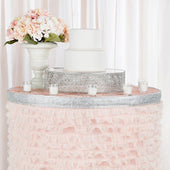
Once you have the anchor color, pull your primary tablecloth option. For formal events, solid-color polyester or satin tablecloths in ivory, white, or deep jewel tones tend to photograph well and hold up through long events. For more casual or themed setups, patterned tablecloths can carry the concept without requiring as many layered accent pieces.
Document the tablecloth choice first on your board. Everything else builds from it.
Layer in Texture With Runners and Overlays
Once the base is set, the next layer is where most of the visual interest comes from. Table runners and overlays add depth, break up large expanses of fabric, and give you a second color or texture to work with.
For a mood board, show the runner laid across the tablecloth swatch at an angle so the client can see how the two interact. If you are presenting digitally, use a flat-lay photo or a simple mockup. The goal is contrast in color, sheen, or texture.
Table runners come in a wide range of fabrics and finishes. A matte tablecloth paired with a satin or sequin runner creates immediate visual contrast. A linen-look tablecloth paired with a gauze or chiffon runner reads as relaxed and organic, which works well for garden parties or brunch events.
Label the runner on your board with the color name and fabric type. Clients often remember the runner more than any other element because it sits at eye level when guests are seated.
Add Chair Treatments as the Vertical Element

Tables get most of the attention in linen planning, but chairs are the vertical element that fills the room. A mood board that ignores chair treatments is missing roughly half the visual field a guest sees when they walk into a space.
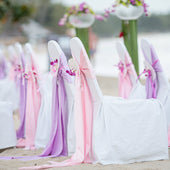
Chair covers and sashes are the two primary options. Chair covers create a clean, uniform look and work especially well in venues where the existing chairs are mismatched or worn.
Chair covers in white or ivory are the most versatile starting point and pair with almost any tablecloth color.
Sashes add color and movement without fully covering the chair. Satin chair sashes are a reliable choice for formal events because the sheen ties back to other satin elements on the table. On your mood board, show the sash color next to the runner swatch. If they match or intentionally contrast, call that out in your presentation notes.
Include Tabletop Accents to Complete the Story
A mood board that stops at fabric misses the full picture. Charger plates, napkins, and backdrop elements round out the concept and give clients a sense of the finished table across the entire table setup.
Charger plates are a high-impact accent that clients often overlook until they see them on a board. A gold or silver charger under a white napkin on a deep-colored tablecloth immediately elevates the perceived formality of the setup. Include a charger swatch or photo on your board and note the finish, whether matte, glossy, or metallic, so the client understands the visual weight it adds.
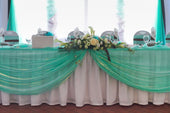
For backdrop elements, especially at head tables or ceremony spaces, velvet backdrop panel drapes add a rich, dimensional background that photographs exceptionally well. If the event includes a sweetheart table or a focal point wall, show the drape color on the board alongside the table linen palette to confirm they work together.
Format the Board for Client Review
The physical or digital layout of the board matters as much as the content. A cluttered board with too many options creates decision fatigue. A clean board with one clear concept builds confidence.
Use a grid format with the tablecloth swatch in the largest cell, the runner and chair treatment in medium cells, and accent pieces in smaller cells. Label every element with the product name, color, and a rough quantity estimate if you have the room count.
If you are presenting in person, bring physical swatches whenever possible. Fabric reads differently on screen than it does in hand, and clients who can touch the material make faster decisions. If the presentation is remote, use accurate color photography and note any screen calibration caveats.
Close the board with a simple one-line summary of the concept, dusty rose with gold accent, formal reception, 20 rounds," so the client can reference it easily after the meeting.
Final Thoughts
A well-built linen mood board does more than show a client what a table will look like. It demonstrates that you have thought through the full room, accounted for their venue and guest count, and made deliberate choices about every element. That level of preparation builds trust and makes the approval conversation much shorter. Build the board as a repeatable template, update the swatches per event, and you will have a presentation tool that works across every event type you take on.
Frequently Asked Questions
What should I include in a linen mood board for a client presentation?
At minimum, include your tablecloth, table runner or overlay, chair treatment, and one tabletop accent such as a charger plate or napkin. Label each element with the product name and color so the board can double as a preliminary order reference.
How many color options should I show on a single mood board?
Stick to one cohesive concept per board. If you want to present alternatives, build a second board rather than mixing palettes on one. Clients make faster decisions when they are reacting to a single, complete concept.
Should I use physical swatches or digital images?
Physical swatches are preferable for in-person meetings because fabric texture and sheen do not translate accurately on screen. For remote presentations, use high-quality flat-lay photography and note that colors may vary slightly by monitor.
How do I handle a client who wants to see multiple style options?
Prepare two boards maximum, one that reflects their stated preferences and one that offers a creative alternative. More than two options tend to stall the decision rather than accelerate it.
When in the planning process should I present the mood board?
Present it at the first design consultation, after you have confirmed the venue, guest count, and event date. The earlier the client approves the linen concept, the more lead time you have to confirm inventory and place the order.