Summary
A charger plate is a large decorative plate placed beneath the dinner plate to define each guest's spot at the table, protect linens from spills and heat, and add a layered, upscale look to a place setting. It's not meant to hold food directly, but instead acts as the foundation the rest of the setting is built on. This guide covers what charger plates are made of, how they're sized, the etiquette around using them, and how to layer one correctly into a table setting.
Our Products


Quick Answer
A charger plate is a decorative underplate, typically 12 to 14 inches in diameter, placed beneath the dinner plate to anchor each place setting and protect the tablecloth underneath. It's set on the table before guests arrive, stays through appetizers and the main course, and is usually removed before dessert. Browse the full charger plates and napkins collection to compare materials and finishes before setting your table.
What Does a Charger Plate Do?
A charger plate, sometimes called a service plate or underplate, sits beneath the dinner plate as the base layer of a formal place setting. It serves several functions at once:
- Defines each guest's place at the table, giving the setting a clear visual anchor before any dinnerware is added.
- Protects table linens from food spills, condensation, and the heat of hot plates or bowls.
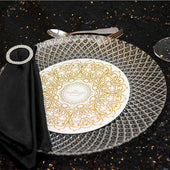
- Adds a layered, upscale look to the table, since the charger's color or finish frames everything stacked on top of it.
- Helps retain warmth when placed under a heated plate or bowl during multi-course meals.
Charger plates are not food-safe in the way dinner plates are, so food is never served directly on top of one. They function purely as presentation and protection, with the actual dinnerware stacked above it.
Why Is It Called a "Charger" Plate?
The term comes from the Middle English word chargeour, which referred to a large platter used to carry food to the table. Over the centuries, that large serving platter evolved into the decorative, non-food-contact base plate used in formal dining today, though the name stuck.
Common Charger Plate Materials


The material of a charger plate affects both the mood it sets and the event's budget. Here's how the most common options compare.
| Materials | Best For | Key Characteristic |
| Glass | Weddings, formal dinners | Clear or tinted rims for an elegant, refined look |
| Acrylic or plastic | High-traffic events, rentals | Durable, affordable, available in many colors and textures |
| Metallic Finish (gold, silver, rose gold) | Galas, holidays, themed dinners | Polished, glamorous finish that catches light |
| Wood, bamboo, or natural textures | Rustic weddings, outdoor receptions | Warm, organic look suited to farmhouse or eco-themed events |
| Disposable | Events with limited cleanup or storage | Practical, no washing or breakage risk |
Charger Plate Etiquette
Using charger plates correctly is part of traditional table-setting etiquette. A few rules apply consistently across formal dining:
- Chargers are set on the table before guests arrive, as part of the initial table setup.
- They remain on the table through the appetizer and main courses.
- They're typically removed before dessert is served, since dessert plates are placed directly on the tablecloth or table runner.
- Food is never served directly on a charger; it's a presentation layer, not a serving dish.
- Charger plates are generally sized between 12 and 14 inches in diameter, large enough to visually anchor the dinner plate, salad plate, and soup bowl stacked above it without overwhelming the place setting.
How to Style Charger Plates in a Place Setting
Step 1: Lay the Base Linen
Start with a tablecloth, overlay, or table runner as the foundation of the table. This is the surface the charger plate will sit directly on top of. Browse the tablecloth collection to find a base that complements your charger's color or finish.
Step 2: Center the Charger Plate
Place one charger plate at each seat, centered so it sits evenly in front of where the guest will sit. Consistent spacing between chargers around the table keeps the overall setting looking intentional rather than uneven.
Step 3: Stack the Dinnerware
Add the dinner plate directly on top of the charger, followed by a salad plate or soup bowl if the meal calls for it. Each layer should sit centered on the charger beneath it.
Step 4: Fold and Place the Napkin
Fold the napkin and set it either on top of the stacked plates or to the side of the charger, depending on the level of formality and the fold style you're using.
Step 5: Frame the Setting With Flatware and Glassware
Arrange utensils on either side of the charger and glassware above it, keeping everything close enough to read as one cohesive setting without physically overlapping the charger itself.
Step 6: Add Final Details
Place cards, menus, or small favors can be added last, positioned near the top of the charger or just above it, to complete the setting.
Choosing the Right Charger Plate

A few factors make it easier to choose the right charger for a specific event:
- Match the material to the formality. Glass and metallic finishes suit formal events, while acrylic or wood-toned chargers fit more casual or themed settings.
- Confirm the size works with your dinnerware. A charger between 12 and 14 inches typically leaves enough of a visible border around a standard dinner plate without crowding the rest of the setting.
- Consider how it will photograph. For weddings and other photographed events, a charger's finish and color show up clearly in overhead and close-up shots, so it's worth checking against the rest of the tablescape in advance.
- Coordinate with the table runner. Pulling a color or metallic tone from the charger into the runner underneath it helps the two layers feel intentional rather than mismatched. The table runners collection includes finishes that commonly pair with glass and metallic chargers.
- Echo the finish in the centerpiece. Repeating the charger's metallic or color tone in the centerpiece ties the full table together from base to focal point. The centerpieces collection includes candle, crystal, and floral options suited to this kind of coordinated styling.
Mixing charger styles at different tables, or even alternating two finishes at the same table, can also create a more curated, personalized look for larger events.
Bringing the Place Setting Together

A charger plate is a small addition with an outsized effect on how finished a table looks, since it's the first layer every other piece of the setting builds on. Getting the material, size, and timing right- set before guests arrive, cleared before dessert, and sized to frame the dinnerware without overwhelming it- is usually all it takes to get the etiquette right and the table looking pulled together.
Frequently Asked Questions
Why is it called a charger plate?
The word comes from the Middle English chargeour, meaning a large platter once used to carry food to the table. The term carried over even as the object's role shifted from serving food to serving as a decorative base beneath the dinner plate.
Can food go directly on a charger plate?
No. Most charger plates aren't food-safe surfaces. Dinnerware is always stacked on top of the charger rather than serving food on the charger itself.
What goes under a charger plate?
A charger plate sits on top of a tablecloth, table runner, or placemat. Nothing else goes underneath it besides the base linen or table surface.
What size charger plate should I use?
Most charger plates range from 12 to 14 inches in diameter, which is large enough to frame a standard dinner plate, salad plate, and soup bowl without overwhelming the place setting.
How do you clean charger plates after an event?
Cleaning depends on the material. Acrylic and metallic chargers can be wiped down with a damp cloth, glass chargers can be hand-washed with mild soap, and disposable chargers are simply thrown away or recycled after use.
Do charger plates replace dinner plates?
No. Charger plates serve a presentation and protective purpose only. A separate dinner plate is still needed on top of the charger to actually serve the meal.