Summary
A statement linen, a gold sequin tablecloth, a velvet runner, a dramatic overlay, draws the eye and sets the tone for the entire table. But a table made entirely of statement pieces reads as chaotic rather than styled. The skill is knowing which element to make bold and which to keep quiet, so the statement lands without overwhelming the setup. This guide covers how to pair high-impact linens from CV Linens™ with practical everyday pieces so every table looks intentional rather than overdone.
Our Products


Quick Answer
- One statement piece per table is the rule. Everything else should support it, not compete with it.
- The tablecloth, runner, and overlay each occupy a different visual layer. Only one of those layers should be the statement.
- Solid-color, matte-finish everyday pieces, napkins, charger plates, plain runners, are what make a statement piece read as bold rather than busy.
- Carry the palette from the statement piece into the supporting elements so the table reads as cohesive rather than assembled from separate decisions.
The One Statement Rule

The most common mistake in table styling is treating every element as an opportunity to add visual interest. A sequin tablecloth, a patterned overlay, a textured runner, and a decorative charger plate on the same table do not add up to a more styled result. They cancel each other out.
One statement piece per table is the rule that makes everything else work. That statement can be the tablecloth, the runner, the overlay, or the centerpiece. Once you have chosen it, every other element on the table should be quieter in texture, simpler in pattern, and more neutral in color so the statement has room to read clearly.
A sequin rectangular tablecloth in gold or silver is a strong statement base. It creates sparkle across the full table surface and reads as high-impact from across the room. Pair it with a solid matte runner, plain napkins, and simple charger plates. The sequin does the work. Everything else holds the space.
How to Choose Which Layer Gets the Statement
The table has three linen layers: the base tablecloth, the overlay, and the runner. Each occupies a different visual zone. The tablecloth covers the most surface area and has the most visual weight. The overlay adds a second texture layer at a smaller scale. The runner defines the center line of the table.
Assign the statement to one layer and keep the other two quiet. If the tablecloth is the statement, use a sheer or solid satin table runner in a coordinating color and skip the overlay entirely. The runner defines the center without competing with the tablecloth.
If the runner is the statement, use a solid-color tablecloth from the tablecloths and table overlay topper collection as the base and keep the overlay sheer or skip it. A velvet or sequin runner on a plain ivory tablecloth reads as more intentional than the same runner on a patterned base.
If the overlay is the statement, use a solid tablecloth underneath and a plain runner on top. The overlay sits between the two and creates the visual complexity. The layers above and below it should be neutral enough to let it show.
Let the Everyday Pieces Do the Supporting Work


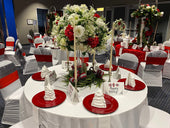
Everyday pieces, napkins, charger plates, and plain tablecloths are not filler. They are the supporting structure that makes the statement piece readable. Without them, the statement disappears into visual noise.
Polyester napkins in a solid color pulled from the statement piece palette are the most practical supporting element on the table. They introduce the palette at the individual seat level without adding texture or pattern that competes with the statement. Fold them simply. A flat fold or a basic roll reads as cleaner than an elaborate napkin fold when the tablecloth is already doing significant visual work.
Charger plates in a single metallic finish, gold for warm palettes, silver for cool ones, reinforce the palette at the place-setting level without introducing a new visual element. Keep the finish consistent across every seat so the table reads as uniform rather than assembled.
Final Thoughts
Balancing statement pieces with everyday table décor is a discipline of restraint. Choose one bold element, support it with quiet ones, and carry the palette consistently from the tablecloth to the napkin. The statement lands harder when everything around it is calm. CV Linens™ carries both the bold and the quiet pieces needed to build that balance across any event setup.
Frequently Asked Questions
How many statement pieces should a table have?
One. A single bold element, whether that is the tablecloth, the runner, or the overlay, reads more clearly and more intentionally than multiple competing textures or patterns. Every additional statement piece reduces the visual impact of the one before it.
Which linen layer should I make the statement?
It depends on the effect you want. The tablecloth has the most surface area and the most visual weight, so it creates the broadest impact. The runner draws the eye down the center of the table and works well as a statement on a neutral base. The overlay adds complexity between the tablecloth and runner and works best when both surrounding layers are quiet.
What everyday pieces work best alongside a sequin tablecloth?
A solid matte runner in a coordinating color, plain polyester napkins, and simple metallic charger plates are the strongest supporting choices alongside a sequin tablecloth. All three introduce the palette without adding texture or pattern that competes with the sequin
Can I use a patterned napkin with a statement tablecloth?
Generally no. A patterned napkin introduces a second visual element at the seat level that competes with the tablecloth rather than supporting it. Solid-color napkins in a palette-matching tone are the cleaner choice when the tablecloth is already doing significant visual work.
How do I carry the palette from the statement piece into the supporting elements?
Identify the two or three colors in the statement piece and use them across the napkins, charger plates, and runner. The supporting elements do not need to match exactly, but they should pull from the same color family so the table reads as a single cohesive decision rather than a collection of separate choices.