Summary
Table runners and tablecloths serve different purposes in wedding design, and understanding when to use each can transform your reception aesthetic while staying within budget. While table runners can sometimes replace tablecloths, especially in modern or rustic weddings where the tabletop is meant to remain visible, full tablecloths are still preferred for formal coverage, protection, and uniform styling across large venues. The choice between runners, tablecloths, or both depends on your wedding style, venue type, and practical needs.
Our Products


Chair Sashes
Chair Linens
Sash Clips & Buckles
Quick Answer
Table runners do not fully replace tablecloths in most traditional weddings because they provide limited coverage and spill protection. Runner-only styling works best for specific themes like rustic farmhouse or modern minimalist weddings, where visible tabletops are intentional design elements. Many weddings use both together for layering, added texture, and practical protection, which offers the best balance of style and functionality.
Key Differences Between Table Runners and Tablecloths


Coverage and Surface Protection
Tablecloths provide complete table coverage from edge to floor, hiding table legs, imperfections, and creating a uniform foundation for your tablescape. They offer full protection against spills, heat from chafing dishes, and wear from dinnerware.
Table runners, by contrast, cover only a narrow strip down the table center (typically 12-18 inches wide), leaving most of the table surface exposed. This means the table itself must be in good condition, and spills can damage the exposed surface.
Visual Impact and Styling Flexibility
Tablecloths create a clean, formal canvas and are essential for traditional ballroom weddings where uniformity matters. Table runners add visual interest through color accents, texture contrast, and directional flow that guides the eye toward centerpieces. Modern wedding design increasingly favors layering runners over tablecloths to create depth, frame floral arrangements, and introduce pattern or metallic elements without overwhelming the space.
When Table Runners Can Replace Tablecloths at Weddings


Rustic, Farmhouse, or Natural Wood Venues
Venues with beautiful wooden farm tables, reclaimed wood surfaces, or polished natural wood are perfect candidates for runner-only styling. The visible tabletop becomes part of your décor, adding warmth and texture that complements burlap, lace, or linen runners. Barn venues, vineyard estates, and garden settings particularly benefit from this approach because it enhances the natural, organic aesthetic.
Modern Minimalist Wedding Design
Contemporary weddings embracing clean lines, negative space, and reduced visual clutter often skip tablecloths entirely. A single sleek runner in satin, sequin, or geometric print provides just enough decoration without competing with statement centerpieces or architectural venues. This approach works especially well in urban lofts, art galleries, or modern event spaces with polished concrete or marble tables.
Outdoor or Casual Celebrations
Backyard weddings, beach ceremonies, and casual garden parties can successfully use runners alone for a relaxed, approachable vibe. The reduced fabric means less worry about wind, easier setup, and lower costs. Picnic-style receptions and intimate gatherings under 50 guests particularly suit this streamlined approach.
When Tablecloths Are Still the Better Choice
Formal Ballroom Weddings
Black-tie affairs, hotel ballrooms, and country club receptions require the polished uniformity that only full tablecloths provide. Floor-length linens in crisp white, ivory, or jewel tones create the elegant foundation expected at formal events. Exposed folding tables or standard banquet tables would undermine the sophisticated atmosphere you've invested in creating.
Damaged or Mismatched Tables
If your venue has scratched, stained, or mismatched tables in various conditions, tablecloths are essential to create visual cohesion. They hide imperfections, unify the room, and ensure every table looks equally polished regardless of what's underneath. This is especially important for venues that use a mix of round and rectangular tables or different table styles.
Large Guest Counts and Catering Service
Weddings with 100+ guests, buffet service, or plated dinners benefit from the spill protection and easy cleanup that tablecloths provide. Servers can wipe down covered tables more easily, spills don't damage rental tables, and the venue turnover is faster. The practical advantages outweigh aesthetic considerations when managing large-scale events.
Using Table Runners and Tablecloths Together
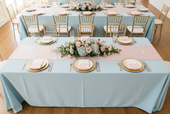
Layering table runners over tablecloths is the most common and versatile approach in wedding design. This combination offers the best of both worlds: full table protection plus decorative accent and visual interest.
Color Contrast and Texture Depth
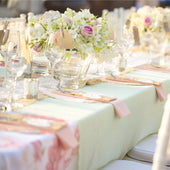
Pairing a neutral tablecloth with a bold runner creates instant drama. Ivory tablecloths with navy blue runners, blush linens with gold sequin runners, or white cloths with burlap runners add dimension without overwhelming your color palette. The layered look photographs beautifully and allows you to incorporate multiple wedding colors.
Framing Centerpieces
Runners act as visual pathways that draw attention to your floral arrangements, candles, or decorative elements. They create a defined zone for centerpieces and prevent the table from feeling too busy or cluttered. This framing effect is especially effective on long rectangular tables where the runner guides the eye down the full length.
Protecting Linens While Adding Decoration
The runner takes the brunt of the centerpiece moisture, candle wax drips, and food spills, protecting your more expensive tablecloth underneath. This practical benefit means easier cleanup and less risk of damage to rental linens. It also allows you to use delicate or expensive tablecloths, knowing the runner provides an extra protective layer.
Balancing Budget and Visual Impact
If the budget is tight, invest in quality tablecloths and add less expensive runners for color and texture. Alternatively, use basic rental tablecloths and splurge on statement runners in sequin, velvet, or embroidered fabrics. This strategic layering maximizes visual impact while controlling costs.
Design Tips for Runner-Only Wedding Tables
When using runners without tablecloths, thoughtful styling ensures your tables look intentional rather than incomplete.
- Match the runner width to the table proportion
- Secure runners for outdoor airflow
- Coordinate with centerpieces and place settings
- Ensure guest comfort and dining space
Match Runner Width to Table Proportion
For standard 30-inch wide rectangular tables, use 12-14-inch runners. Wider 36-inch tables can accommodate 16-18-inch runners. Round tables look best with runners that extend from edge to edge across the diameter, creating a cross or single stripe effect. The runner should be proportional, not overwhelming or too narrow.
Secure Runners for Outdoor Airflow
Outdoor weddings require runner weights, clips, or double-sided tape to prevent wind from lifting fabric. Heavier materials like burlap or thick linen naturally stay in place better than lightweight organza or chiffon. Consider the climate and weather forecast when selecting runner fabric for outdoor venues.
Coordinate with Centerpieces and Place Settings
Runner-only tables need a stronger centerpiece presence to avoid looking bare. Use larger floral arrangements, clustered candles, or layered décor elements.
Chargers, patterned dinnerware, and cloth napkins add visual weight and make the table feel complete and intentional.
Ensure Guest Comfort and Dining Space
Leave adequate space on either side of the runner for place settings, glassware, and serving dishes. Runners should enhance, not crowd, the dining experience. For rectangular tables seating 8-10 guests, ensure at least 24 inches of clear table space per person.
Choosing Runner Length and Width for Different Table Sizes
6-Foot Rectangular Tables
Use 72-90 inch runners (allowing 6-12 inch overhang on each end) with 12-14 inch width. These tables typically seat 6-8 guests and need balanced runner proportions.
8-Foot Rectangular Tables
Opt for 96-108 inch runners with 14-16 inch width. Longer tables benefit from slightly wider runners to maintain visual balance and accommodate larger centerpieces.
60-Inch Round Tables
Choose 72-90 inch runners that drape across the diameter with overhang on both sides. You can use one runner or create an "X" pattern with two runners for added interest.
Rectangular vs. Round Table Considerations
Rectangular tables naturally showcase runners as directional elements that emphasize length. Round tables require creative placement, either as a single stripe across the center or multiple runners radiating from the middle. Round tables without tablecloths can look unfinished, so this style works best with beautiful wood surfaces.
Cost, Setup, and Practical Considerations
Budget Comparison
Table runners typically cost less per piece than full tablecloths, but you may still need tablecloths underneath for protection, which eliminates savings. Runner-only styling reduces linen rental costs by 40-60% but requires tables in excellent condition. For venues with quality tables, this can be a significant budget win. For venues with standard banquet tables, the savings disappear when you factor in table refinishing or replacement costs.
Setup and Cleanup Efficiency
Runners are faster to place than full tablecloths, reducing venue setup time. However, exposed table surfaces require more careful cleanup after events, and spills can cause permanent damage to rental tables. Venues often charge damage fees for stained or scratched tables, which can exceed the cost of renting tablecloths. Consider your guest demographic and the likelihood of spills when making this decision.
Rental Versus Purchase Decisions
For one-time weddings, renting both tablecloths and runners is usually most cost-effective. Event planners, venues, or couples hosting multiple events may benefit from purchasing runners in versatile colors while renting tablecloths. Runners are easier to store, launder, and reuse than bulky tablecloths, making them a better investment for repeat use.
Table Runner vs. Tablecloth vs. Both
Feature |
Runner Only |
Tablecloth Only |
Layered Together |
Coverage |
Center strip only |
Full table coverage |
Full coverage with decorative accent |
Cost level |
Lowest |
Moderate |
Highest |
Formality |
Casual to modem |
Formal to traditional |
Works for most styles |
Setup time |
Fastest |
Moderate |
Longest |
Spill protection |
Minimal |
Excellent |
Excellent |
Best use case |
Rustic, modern, or quality wood tables |
Formal events or imperfect tables |
Most weddings and balanced styling |
Final Thoughts
Table runners can replace tablecloths in certain wedding styles, particularly rustic, modern, or casual celebrations where visible tabletops enhance the aesthetic. This approach works beautifully when you have quality tables, a relaxed atmosphere, and a design vision that embraces minimalism or natural elements. However, tablecloths remain essential for formal coverage, spill protection, and creating uniform elegance in traditional ballroom settings or venues with less-than-perfect tables.
For most weddings, the layered approach using both runners and tablecloths offers the most balanced solution. This combination provides full protection and a formal foundation while adding color, texture, and visual interest through the runner. It allows maximum styling flexibility, protects your investment in linens, and creates the dimensional, polished look that photographs beautifully.
Whether you choose runners alone, tablecloths alone, or both together, the right decision depends on your venue's table quality, your wedding's formality level, your budget, and your overall design vision. Consider these factors carefully, and don't hesitate to mix approaches across different areas of your reception for varied visual impact.
Frequently Asked Questions
Can you use only table runners at a wedding?
Yes, you can use only table runners at weddings with rustic, modern, or casual themes where visible tabletops are part of the design. This works best when tables are in excellent condition, the venue has natural wood or polished surfaces, and you're comfortable with minimal spill protection.
Is it cheaper to use runners instead of tablecloths?
Runners alone are cheaper than renting both tablecloths and runners, potentially saving 40-60% on linen costs. However, you may face venue damage fees if spills stain exposed tables, and the cost savings disappear if you need to refinish or protect rental tables.
Do formal weddings require tablecloths?
Yes, formal ballroom weddings, black-tie events, and upscale venue receptions typically require full tablecloths for the polished, uniform elegance expected at these occasions. Floor-length linens are considered standard for formal wedding etiquette and create the sophisticated foundation these events demand.
How do you style runner-only tables so they don't look plain?
Use larger, more dramatic centerpieces, add chargers and patterned dinnerware, incorporate cloth napkins with decorative folds, and ensure the table itself is beautiful enough to be part of the décor. Layering multiple textures and heights in your centerpiece arrangement prevents the table from looking bare or unfinished.
Can runners damage wooden tables without a cloth underneath?
Yes, runners without tablecloths can allow spills to seep through and stain wood, and hot serving dishes can leave heat marks on unprotected surfaces. To prevent damage, use table pads or trivets under hot items, clean spills immediately, and consider the runner fabric's absorbency when making your choice.
What size table runner do I need for an 8-foot table?
For an 8-foot (96-inch) rectangular table, use a 96-108-inch runner to allow 6-12 inches of overhang on each end. Choose a width of 14-16 inches to maintain proper proportion and leave adequate space for place settings on both sides of the runner.