Summary
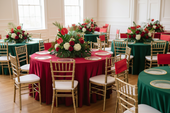
Yes, it is okay to put placemats on a tablecloth. Etiquette treats the two as separate options, with a tablecloth for formal dinners and placemats for informal meals, but it does not forbid combining them. Layering is a common choice for casual dinners, holiday meals, showers, and parties because the placemats protect the cloth at each seat and add color and texture. This guide covers when to layer, when to skip it, and how to set it up neatly.
Our Products


Quick Answer
Yes, you can put placemats on top of a tablecloth. Traditional etiquette pairs a tablecloth with formal dinners and placemats with informal meals, but it does not prohibit using both, and layering suits casual dinners, holiday meals, and styled events. For a balanced look, pair patterned placemats with a solid tablecloth, or use solid placemats with a patterned cloth. Choose colors or textures that provide contrast, and position each placemat approximately 1 inch from the table edge. For a formal dinner or wedding reception, a tablecloth on its own is the safer traditional choice. Browse the placemats collection to see woven, embroidered, scalloped, and flower-shaped styles for layering.
What Does Etiquette Say About Placemats and Tablecloths?

Traditionally, a tablecloth signals a formal meal and placemats signal an informal one, so the two are not usually used together. That is a convention, not a rule: etiquette guidance does not require them to be kept separate, and many hosts layer them for casual and semi-formal tables. Sources differ on formal settings, so follow the host's preference when the event is formal.
| Occasions | Suggested Setup | Why |
| Everyday family meals | Placemats alone | Quick to wipe, with no cloth to launder |
| Holiday or Sunday dinner | Tablecloth, with placemats if the meal is casual or messy | The cloth sets the tone, and the mats take the spills at each seat |
| Formal dinner or wedding reception | Tablecloth alone | Traditional etiquette reserves placemats for informal meals |
| Casual party, shower, or buffet | Tablecloth with placemats | Adds texture and defines each seat |
| Kids' parties and messy meals | Tablecloth with wipeable placemats | The placemat catches the spill instead of the cloth |
Why Layer Placemats Over a Tablecloth?
Placemats are usually placed under dinnerware to protect the surface from spills, stains, and scratches. On a tablecloth, they protect the cloth rather than the table: a spill lands on a placemat you can wipe or wash, rather than on the cloth. They also give each guest a defined spot and add a second layer of color, pattern, or texture.
Placemats vs. Tablecloth: Which Should You Use?
| Tablecloth | Placemats | Both | |
| Coverage | Covers the whole table | Covers each seat only | Full coverage plus a defined seat |
| What it protects | The table surface, and it hides surface wear | The surface or cloth under each place setting | The cloth stays cleaner at every seat |
| Formality | Formal to casual | Casual | Casual to semi-formal |
| Trade-off | Needs laundering and pressing | Leaves bare table between seats | More pieces to buy, set, clean, and store |
How to Put Placemats on a Tablecloth, Step by Step
Step 1: Decide Whether Layering Fits the Occasion
Use the occasion table above. If the event is a formal dinner, skip the placemats. If it is a casual or semi-formal table, continue.
Step 2: Start With the Tablecloth
Choose the tablecloth first because its color and pattern will influence the placemat colors, textures, and designs that complement it. A solid cloth gives patterned or woven placemats room to stand out, while a patterned cloth calls for solid placemats. Browse the tablecloths collection to find a base color before you shop for placemats.
Step 3: Choose Placemats That Contrast With the Cloth
Pick placemats that are clearly lighter, darker, or more textured than the tablecloth. A placemat close in color to the cloth tends to disappear, which defeats the point of layering.
Step 4: Match the Material to the Meal
Wipeable materials such as vinyl or silicone suit messy meals and children's parties. Woven natural materials such as raffia, straw, bamboo, and burlap add texture over a solid cloth. Cloth placemats pair naturally with a cloth tablecloth for a coordinated look. The CV Linens™ placemat styles include braided raffia straw, woven fringe, boho raffia leaf, flower linen embroidery, scallop, and sunburst edge designs.
Step 5: Smooth the Cloth and Set Each Placemat
Smooth out the tablecloth first, so creases do not lift the edges of the placemats. Then set each placemat about an inch in from the table edge, measured from the point where the cloth begins to drape. Line them up across the table so every seat matches, and set one full place first to check the fit before you do the rest.
Step 6: Layer the Place Setting
If you are using a charger plate, place it on the placemat first, followed by the dinner plate and napkin. The placemat needs to be larger than the charger: chargers are commonly 13 inches across, so a 15-inch placemat leaves a 1-inch border, while a 12-inch-wide placemat is narrower than the charger. Choose napkins in a color pulled from the cloth or the placemat to tie the layers together. The napkin collection includes a range of fabrics and colors for this.
Can You Use a Table Runner and Placemats Together?
Yes, if the runner leaves enough room. Work it out with this formula: space for each placemat = (table width minus runner width) divided by 2, minus 1 inch for the gap at the table edge.
On a 36-inch-wide table with a 12-inch runner, that is (36 - 12) / 2 - 1 = 11 inches, so a placemat that is 12 inches deep overlaps the runner by about an inch. On a 30-inch-wide banquet table with the same runner, only 8 inches remain, so a 12-inch-deep placemat overlaps the runner by about 4 inches. If the numbers do not work, use a narrower runner, let the placemats overlap its edges slightly, or skip the runner. The table runners collection includes a range of widths and textures to compare.
Tablecloth and Placemat Color Pairings
| Tablecloth | Placemat Pairing | Look |
|
White or ivory |
Navy or emerald green | Bold, high contrast |
| Off-white | Dark brown | Bohemian |
| Dusty rose | White | Soft and casual |
| Dusty blue | White or ivory | Subdued |
| Gold sequin | White, ivory, or cream | Glam, with the mat keeping the plate off the sequins |
When Layering Isn't Worth It
Layering adds pieces, and pieces add work. Tablecloths are counted per table and placemats per seat, so a 10-seat table needs 1 tablecloth but 10 placemats, which is three 4-piece sets if the style is sold in sets of 4. For large events, that is a lot of extra items to set, collect, and clean. Layering is also less useful on a heavily patterned cloth, where placemats add visual noise, and it is not the traditional choice for formal dinners.
Should Placemats Stay on the Table?


At an event, leave placemats in place throughout the meal to maintain a consistent table setup. Remove heavily soiled placemats along with the used dinnerware after the meal. At home, it is a matter of preference: wipe and store them after each meal, or leave them out if you use them daily.
Bringing It Together
It is okay to put placemats on a tablecloth. Skip them for a formal dinner, and use them for casual, holiday, and styled events. Choose placemats that contrast with the cloth, match the material to the meal, set them an inch from the edge, and check the clearance if you are adding a runner. A quick test with one place setting shows whether the combination works before you set the whole table.
Frequently Asked Questions
Is it okay to put placemats on a tablecloth?
Yes. Etiquette does not forbid it, although tablecloths are traditionally associated with formal meals and placemats with informal ones. Layering is common for casual dinners, holiday meals, and styled events.
Do you need placemats if you have a tablecloth?
No. A tablecloth works on its own, and placemats are optional. Add them if you want to protect the cloth at each seat or add color and texture.
What is the purpose of a placemat?
A placemat protects the surface under it from spills, stains, and scratches, defines each guest's place, and adds color and texture to the table. On a tablecloth, it protects the cloth.
Should placemats match the tablecloth?
They should complement it, not match it exactly. A placemat in the same color or pattern as the cloth blends in, so choose one that is lighter, darker, or more textured, and pair patterns with solids.
Can you use placemats with a tablecloth at a formal event?
Traditional etiquette favors a tablecloth alone for formal dinners. Layering is more suited to casual and semi-formal tables, so follow the host's preference for formal events.
Should you leave placemats on the table?
At an event, leave them through the meal for a consistent look. At home, it is a matter of preference.
Are placemats out of style?
No. Placemats remain an accepted choice for informal meals and a common styling layer at casual and semi-formal events.
Can you use a table runner and placemats together?
Yes, if the runner leaves enough room. Subtract the runner width from the table width, divide by 2, and subtract 1 inch to find the space each placemat has. If the placemat is deeper than that, narrow the runner or let the placemats overlap its edges slightly.