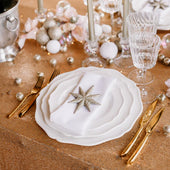
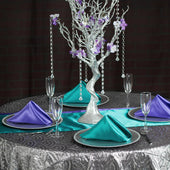
Choosing between a table runner and a table overlay depends on the table’s size, purpose, and visibility. While both add visual depth, they function differently and can be styled in unique ways. This guide breaks it down by table type to help you decide what works best and how to layer your linens effectively.
Table runners work best for lengthwise styling and narrow focal areas. Overlays are ideal for framing the entire table or adding texture and contrast. This guide includes examples and tips for every key wedding table setup.


Sweetheart Table: Layer for Depth and Photos
At the couple’s table, the sweetheart setup should stand out. Start with a full tablecloth, then layer a textured table overlay such as sequin, rosette, or velvet. These overlays add weight and visual impact, especially in photos.
A table skirt can finish the look, especially if the table will be viewed from multiple angles. To add structure, consider topping the overlay with a contrasting table runner for a layered look that feels intentional.
Example:
A white tablecloth with a blush satin overlay, paired with a sheer glitter runner down the center, creates a soft romantic palette that works well in garden weddings or formal halls.
Guest Tables: Mix and Match Based on Shape
For round guest tables, overlays are often preferred. A centered square overlay adds color and texture while allowing space for dinnerware. For long banquet-style tables, table runners offer better coverage and visual flow across seating.
Elegant table cloths can completely transform a simple reception setup into a polished, cohesive look that matches your wedding theme.
To make your tables stand out, consider layering a red tablecloth underneath your overlays or runners for a rich, eye-catching base that enhances any layout.
You can alternate styles across the venue. For example, use overlays on guest tables near the dance floor and runners on those closer to the bar or exit. This adds subtle variation without disrupting your overall theme.
Example:
Round tables feature ivory overlays and dusty blue centerpieces, while rectangular tables feature full-length cloths with champagne satin runners and greenery.
Buffet and Dessert Tables: Layer for Practicality
Buffet and dessert tables benefit from layering for both aesthetic and functional reasons. A full tablecloth is non-negotiable. Layer a durable overlay like polyester or satin for easy cleanup, then use a runner to define zones or direct the flow of traffic.
If your tables are against a wall, let the overlay hang longer in front for added texture. For center-placed stations, use a table skirt for a complete 360-degree look.
Example:
A black tablecloth base with a gold satin overlay, topped with a black and white striped runner for separating drink dispensers from food trays.
Cake Table: Highlight the Centerpiece
The cake table is often a focal point at weddings and deserves visual attention. Overlays add elegance and can help spotlight the cake, especially when paired with uplighting or floral accents. Textured overlays work best here, since guests won’t be seated at this table.
Runners are less common but can be used to lead the eye toward a central cake on a pedestal or stand.
Example:
A champagne rosette overlay on top of a full-length white cloth creates a textured backdrop for a tall tiered cake.
Gift Table: Clean Lines with Minimal Layering
For gift tables, clean and flat surfaces matter. A table overlay in satin or organza can soften the look and provide color. If you want more structure, a runner can help define the center and guide guests to drop gifts in a designated spot like a card box or basket.
Example:
A dusty rose overlay on a white tablecloth with a gold runner under a clear acrylic card box.
Sign-In or Welcome Table: Add Texture to the First Impression
The first table guests see should feel cohesive with the rest of your decor. Depending on your layout, use an overlay for added texture or a runner to highlight signage, guest books, or programs.
Use colors that tie into your event’s overall palette and fabric types that reflect the formality of your wedding.
Example:
A soft ivory tablecloth with a sage green chiffon runner under a floral guest book arrangement and framed welcome sign.
Cocktail Tables: Runners or Overlays with Ties
Cocktail tables (also called highboys) are usually small and tall, used during cocktail hour or receptions. A fitted stretch cloth with a tied table overlay creates volume and adds movement. Alternatively, wrap a satin runner diagonally and secure it with a ribbon or floral tie for a cleaner look.
Example:
A gold sequin overlay tied at the base over a black spandex cloth for a glam evening vibe.
Final Thoughts
There is no one-size-fits-all answer when choosing between table runners and overlays. It depends on the table’s purpose, shape, and position in your layout. Sweetheart and cake tables benefit from layered overlays. Guest tables need balanced setups that allow room for dining. Buffet, dessert, and gift tables offer more flexibility with layering.
Smaller tables like sign-in and cocktail setups can be styled with creative wraps and ties. With quality linens from CV Linens™, you can easily mix and match runners, overlays, and base cloths to style each table for function and impact.
Our Products


Table Runners
Tablecloths
Table Overlays